Limited Time 100% Discount on Application fee. 



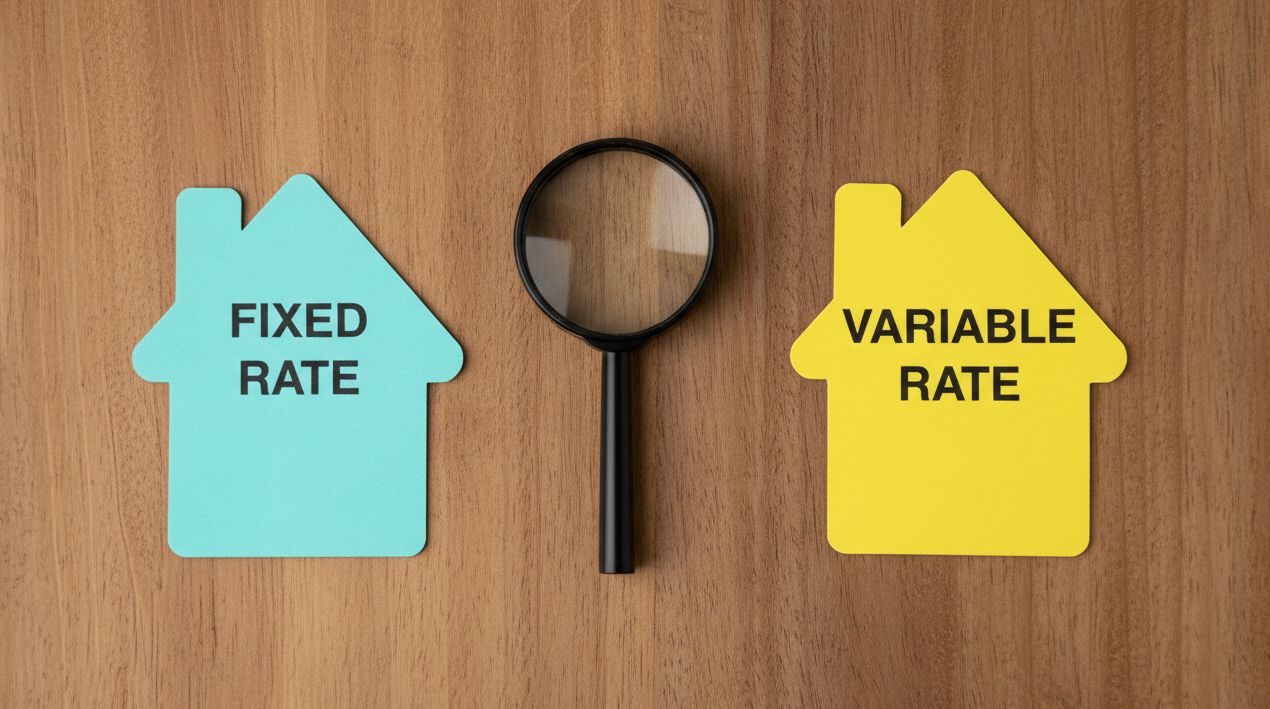
Fixed and variable mortgage rates offer distinct paths for homebuyers in the UAE, balancing predictability against potential savings. Understanding their mechanics helps borrowers align choices with financial goals and market conditions.
Fixed rate mortgages lock in the interest rate for a set period, typically 1-5 years, ensuring consistent monthly payments. This stability shields borrowers from EIBOR fluctuations, making budgeting straightforward even if base rates rise. However, fixed rates often start higher than variable options, and early repayment may trigger penalties.
A buyer finances AED 800,000 on a Dubai villa at a 4.5% fixed rate for 3 years, with monthly payments locked at AED 4,500 regardless of EIBOR rising to 5.2%. Another example: an Abu Dhabi expat secures a 25-year mortgage at 4.75% fixed, avoiding payment shocks during 2025 rate hikes but paying a 1% penalty if selling early.
EIBOR, or the Emirates Interbank Offered Rate, is a daily rate published by the UAE Central Bank. It is based on the average interest rates offered across all banks in the UAE within a particular period, excluding the two highest and two lowest rates. The EIBOR periods are: overnight, 1 week, 1 month, 3 months, 6 months, 12 months.
Variable rates tie to benchmarks like 1-, 3-, or 6-month EIBOR, allowing payments to adjust periodically with market shifts. They frequently offer lower initial rates, benefiting borrowers if EIBOR falls, though rises can increase costs unexpectedly. Types include adjustable-payment (payments change with rates) and fixed-payment (payments stay level, but principal reduction varies).
For AED 1,000,000 financed on a Sharjah apartment at EIBOR +1.5% (starting 4%), payments drop to AED 5,200 monthly if EIBOR falls to 3.5%, but rise to AED 6,100 if it climbs to 5%. A fixed-payment variable case keeps AED 5,500 steady, but high EIBOR shifts more toward interest, slowing equity buildup.
| Feature | Fixed Rate Mortgage | Variable Rate Mortgage |
| Interest Stability | Locked for term | Fluctuates with EIBOR |
| Monthly Payments | Predictable | Can rise or fall |
| Initial Rate | Typically higher | Often lower |
| Risk Level | Low (protected from hikes) | Higher (exposed to increases) |
| Flexibility | Penalties for early exit | Easier switches, lower break fees |
| Scenario | Fixed Rate Outcome | Variable Rate Outcome |
| EIBOR Rises 1% | Payments unchanged | Payments increase 10-15% |
| EIBOR Falls 1% | No benefit until renewal | Savings of AED 300-500/month |
| Early Sale After 1 Year | 3-month interest penalty | Minimal or no fee |
When comparing fixed vs variable mortgage, there’s no “one-size-fits-all” answer.
Ask yourself:
Pro Tip: In uncertain markets, many buyers choose a hybrid — a fixed rate for the first 2–3 years, then switch to variable.
Opt for fixed rates if prioritizing security, especially short-term or amid rising EIBOR forecasts. Variable suits risk-tolerant buyers expecting stability or drops, ideal for longer terms to dodge reversion rates. Consult an independent broker for personalized advice based on your finances and UAE property goals.

