Limited Time 100% Discount on Application fee. 



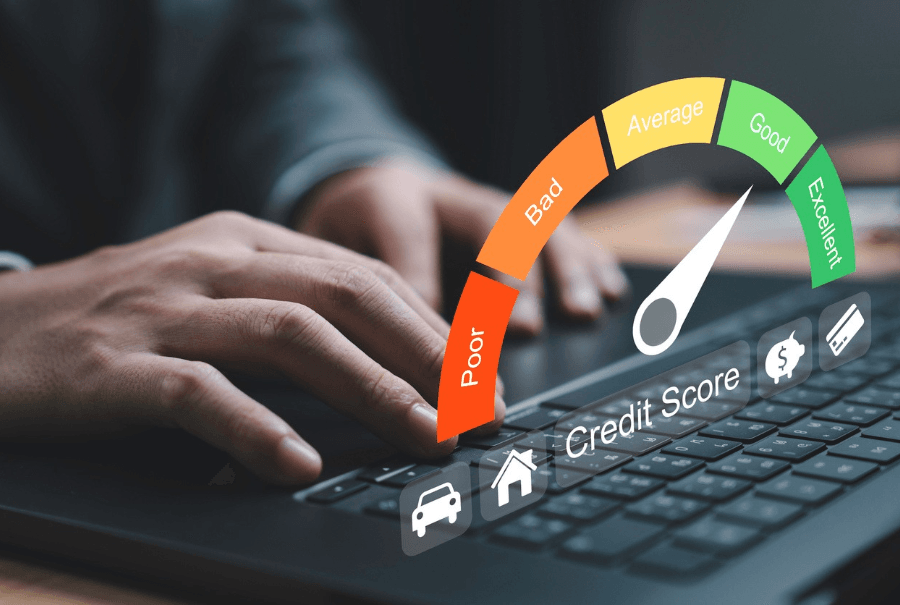
Your credit score can influence whether a UAE bank approves your mortgage, how much you can borrow and, potentially, the interest rate you are offered. Yet many buyers only discover problems with their credit history after finding a property and applying for financing. Understanding your AECB credit score before you start your property search can help you spot issues early and avoid unnecessary delays.
The Al Etihad Credit Bureau (AECB) collects credit information from banks, finance companies, and other participating data providers in the UAE. Its credit reports record information such as outstanding loans, credit cards, repayment history, and certain overdue obligations. The AECB credit score is a three-digit number ranging from 300 to 900 that indicates the likelihood of a borrower missing payments over the following 12 months. A higher score generally indicates lower credit risk, although the score is only one part of a lender's assessment.
Your credit report and credit score are not the same. The score summarises credit risk, while the report contains the underlying information. For mortgage applicants, the report can sometimes be more revealing than the number itself.
If you are looking to check your credit score in the UAE, the process is relatively straightforward. You can access your credit information through AECB's official digital channels, including its website and mobile application, using the available identity verification process. Select the credit score or credit report service, complete the required verification, and pay the applicable fee.
For mortgage planning, obtaining the full report is usually more useful than purchasing the score alone. Review your active credit facilities, outstanding balances, repayment records, and any accounts that should have been closed. Check whether the information matches your actual financial position.
Do this before submitting mortgage applications, ideally several months ahead of your intended purchase. If you identify inaccurate information, raise a dispute through AECB's official process so the relevant data provider can investigate and correct it where appropriate.
No single AECB score guarantees mortgage approval across all UAE banks. Lenders establish their own credit policies and consider income, employment stability, existing financial commitments, property valuation, and affordability alongside credit history.
A borrower with a relatively strong score may still struggle to qualify if their monthly debt obligations are too high. Conversely, a lower score doesn't automatically mean every lender will reject an application, although it can limit your options.
That is why you should never assess mortgage eligibility based on credit score alone.
One of the most overlooked issues is the difference between a credit card's outstanding balance and its approved limit. Under UAE Central Bank retail lending rules, banks generally calculate a monthly credit card commitment using 5% of the total approved credit limit when assessing the debt burden ratio (DBR), even when the card is paid off regularly.
Consider a buyer earning AED 25,000 per month with a credit card limit of AED 60,000. The bank may attribute AED 3,000 per month to that facility for affordability calculations. With the standard DBR ceiling of 50% of monthly income for expatriate borrowers, the buyer's total monthly debt commitments would generally need to remain within AED 12,500. That AED 3,000 card commitment could therefore leave only AED 9,500 for a mortgage installment and other debts, even if the card has no outstanding balance.
Reducing an unnecessary credit limit may improve mortgage affordability without immediately changing your credit score. This is a crucial distinction: improving your AECB score and improving your mortgage eligibility are related, but they are not identical goals.
For borrowers researching how to improve credit score in UAE, the most effective approach begins with consistent financial behaviour rather than quick fixes. Pay loan and credit card installments by their due dates, reduce outstanding revolving balances, and avoid repeatedly applying for new credit shortly before seeking a mortgage. Where possible, clear overdue amounts and check that lenders have updated the relevant records.
Credit card utilisation also deserves attention. A borrower using AED 45,000 of a AED 50,000 limit may present a different risk profile from someone using a small portion of the same facility, even if both make their minimum payments. Reducing balances can strengthen the overall credit position, although AECB does not publish a universal utilisation threshold that guarantees a particular score.
Avoid closing every credit facility simply to improve your score. Closing an account can change your credit profile, and the outcome depends on the wider history. If the objective is mortgage affordability, review unnecessary limits and existing installments with a mortgage adviser before making changes.
Ideally, review your credit report three to six months before applying for a home loan. This gives you time to resolve reporting errors, reduce expensive debt, and establish a consistent repayment record. It is a planning window, not a guarantee that the score will improve within that period.
For buyers with personal loans, clearing an installment before applying may improve their DBR, but the lender must first recognise the updated liability position. Obtain settlement documentation and allow time for the credit report to reflect the change.
At BNW Mortgages, we encourage buyers to assess their credit profile alongside their borrowing capacity before committing to a property. A strong application is built not simply on a good credit score, but on a financial position that remains sustainable after the mortgage begins.
Your AECB credit score is an important starting point, but it does not tell the whole mortgage story. Understanding the report behind the score, managing credit limits and assessing existing obligations can make a meaningful difference to your borrowing options. The objective is not to chase a perfect number. It is to show reliable repayment behavior while keeping enough financial flexibility to own a property comfortably.

